Showing posts with label Books. Show all posts

Sunday, March 4, 2012

Sweet Judy Blue Eyes


Judy Collins' memoir Sweet Judy Blue Eyes tells the fairy tale story of a talented woman's career in the music business beginning in the early sixties when middle class women were largely raising families or otherwise standing by their man. But it also details the undertones of an adulthood spent in denial of alcoholism and depression and in living a public life posing as an invulnerable person when Collins was anything but on the inside.

In a breathy and candid style, Collins talks about her marriage at 19 and a long custody battle for her only child of that marriage, son Clark Taylor, who committed suicide in 2003. She discusses, with some regret, her need to earn money after her divorce from Clark's father which resulted in intermittent living arrangements with Clark as he was growing up. Collins' self-portrayal is one of a tenacious woman who succeeds in using her talent to both earn a living and work for the social and political change she so ardently believed in.

Judy Collins writes openly about her battle with alcoholism, her many affairs with talented men, including Stephen Stills who wrote for her the brilliant and heartfelt tribute Suite: Judy Blue Eyes. From photographs included in the book, as well as snippets of conversation from Collins' perspective, it appeared they were madly in love and perfect for each other but needed to part for the sake of their respective careers. It was also a west coast/east coast sort of dilemma. Stills living and working in Laurel Canyon and Collins wanting to remain in New York City close to the folk scene in Greenwich Village and to her son who visited from Connecticut.

When writing about her relationships, Collins used good judgement and restraint. Always a class-act.  Here is what Collins wrote about the night she and Stephen Stills broke up and how he shared the song Suite: Judy Blue Eyes with her:

 "It would have been enough that he could spell out the troubles in our love affair, but the song itself was so glorious, so transporting, that had it not been about me, I would have dreamed it might have been - it was a triumph of writing, of feeling, of his deep melodic gifts. I had heard a lot of songs and sung some that had become hits. I knew I was listening not only to my story but also to a song that was going to be for all times, not just for ours. It was a classic and it broke my heart."


As a reader, I was happy to be transported to the canyons of Southern California and the Greenwich Village folk music scene of the time. Many names from both coasts and beyond are dropped in the book - Dave Van Ronk, Phil Ochs, Peter Seeger and of course, Bob Dylan and Joan Baez.  Collins discusses her friendship with Leonard Cohen and muses as to why they were never lovers.  (I'd be wondering, too.) Collins mentions Joni Mitchell several times, once describing her at a party in west L.A. this way:

"From time to time a certain look would pass over her face as she caught the eye of someone or noticed something she didn't cotton to, but then, like the sun peeking out from the clouds, she would break into a smile or even a song." 


Once, when in the company of Janis Joplin, the latter leaned over the table to Collins and said "You know, one of us is going to make it and it's not going to be me."

My only objection to Sweet Judy Blue Eyes besides the icky-goo title is...urrr...the airbrushed and exaggerated photo that was chosen for its cover.  A naturally beautiful woman like Judy Collins shouldn't feel the personal or public pressure to look perfect. If one looks inside the jacket to read her story, it soon becomes obvious that the life of Judy Collins was anything but perfect.


The Judy Collins Website

My next book was going to be Truman Capote's In Cold Blood from 1966, but a very special book fairy sent me this book and so Truman will have to wait.  I need to be right here, right now.  :-)  

Tuesday, November 1, 2011

Robert Frank

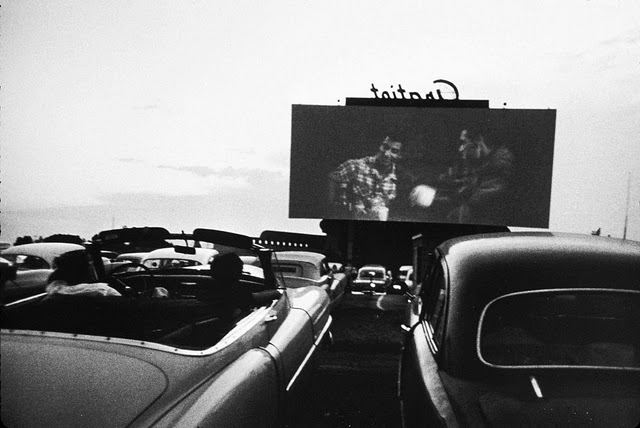
 Robert Frank is a Swiss-born American photographer best known for a volume of photos from 1958 called The Americans. Unintentionally, it is a grittier look at American life than was presented in the American photographs contributed to the well-known photo anthology The Family of Man by Edward Steichen, from 1955.

It was in 1955, funded by a Guggenheim grant, that Frank packed up his family and took a series of road trips that yielded some of the most iconic images of an America that doesn't always like itself. Having met beat writer Jack Kerouac on one of those trips, Frank showed Jack some of his portfolio and Jack agreed to write the introduction. Poet Allan Ginsberg became a life-long friend of Frank; their respective forms of expression were compatible in their shared viewpoint on class and race differences and the underclass that reared its head despite the rosy, American-as-apple-pie depictions in the mainstream.

Needless to say, Frank had a difficult time finding an American publisher and thus the book was published first in Paris. Les Américain was to finally be published in the U.S. a year later and was met with substantial criticism, not only for its subject matter but also what was then unorthodox photographic techniques such as blurred images and off-kilter perspectives.

The eighty-three photographs contained in the book, were culled from the twenty-seven thousand photos he took in Detroit, Miami, New Orleans, Salt Lake City, Los Angeles and Butte, Montana, among other places.

While driving through Arkansas in 1955, Frank was stopped, detained and questioned by police for "suspicious activity", which included being in possession of several cameras.

Here is a sampling of what I think are the most evocative photographs from The Americans.


  " I don't call my photographs masterpieces."


 Hoboken, New Jersey


 Charlestown, South Carolina

 Butte, Montana

 Detroit, Michigan

Frank produced a few films, the most notorious of which is  Pull My Daisy, an adaptation from an act in Jack Kerouac's unfinished play, The Beat Generation. The title of the film is a poem by Allan Ginsberg,  who stars in and narrates the film. To my surprise, the American painter Alice Neel was also involved in the film.

Other Frank films include Sin of Jesus and Cocksucker Blues, a unreleased documentary film about The Rolling Stones; to this day mired in legal red tape.

Frank returned to photography after moving to Cape Breton Nova Scotia, his still work taking on a very personal and introspective vein after a couple of personal tragedies, including the death of his daughter in a 1974 plane crash.


Related Links and Resources:


*

Sunday, June 12, 2011

Sunday Snippet: Running with Scissors


In the early 2000's Augusten Burroughs' memoir Running with Scissors became an instant sensation. Locally, its popularity went over the top, as Burroughs was brought up in Amherst and Northampton. The talk around the book was great enough that I avoided it until after the hype wore off. It was hard to avoid learning things about the book and the author's strange and dysfunctional upbringing. I stuck to my guns, though, as I don't like to read a book or see a film when there is so much of other people's attention focused on it. I like to have a clear and open mind as a reader and draw my own conclusions based on the work itself and not on the swirl of opinions held by others.

Nine years passed and I forgot all about Running with Scissors until a couple of weeks ago when I heard that Burroughs' (that is his nom de guerre) mother Margaret Robeson, much written about in Running with Scissors, had published a memoir in her own defense. A few years ago I  read Burroughs' brother's memoir Look Me in the Eye, about his lifelong struggle with Asperger's, a form of autism. After finding Running with Scissors at my local library, I am now halfway through it and really enjoying it.

The NPR story on The Long Journey Home, Margaret Robeson's recently published memoir, intrigued me for a couple of reasons. Firstly, that three people in the same family should have quite distinct and at times very different perspectives on the same set of events. This is a testament to the complexity of individual experience and its resultant memories and how we interpret both. Secondly, I'll admit to being fascinated by Burroughs' characterization of his mother, who identified herself as a poet and had high ambitions of having her work published in The New Yorker. I'm waiting for inter-library loan of her book to arrive and I'm sure it will be a long wait, as local fans of Burroughs book clamor for it as a means of comparison.

Most memoirs have the feel of vindictiveness or are self-pitying portraits of betrayal and disappointment. Augusten Burroughs' doesn't strike me as self-pitying or vindictive, just as a story he had to write and publish, perhaps as a way of making sense of his strange childhood circumstances. It is also very funny without compromise to the seriousness of child neglect and the dangers of psychological quackery.

 Just a bit of background on the snippet, taken from the chapter Pure Projection: at the age of thirteen, Augusten Burroughs was sent to live and eventually became the legal charge of his mother's psychiatrist, given the name Dr. Finch in the memoir. Dr. Finch had several children, both teens and adults, some of them the children of former patients or patients themselves, living with him in his massive Victorian home. In this excerpt, Burroughs discusses how anger was addressed in the Finch household.

The most excellent fights involved five or more people. Eventually, the fight would be resolved the way all disputes were resolved:  Dr. Finch. He would be called at the office or the arguing group would travel en masse to his office, a hostile collective gang, and oust whatever patient he was seeing at the time. "Family emergency," someone would say. And the patient, whether a potential suicide or somebody suffering from a multiple personality disorder, would be transferred to the waiting room to drink Sanka with Cremora while Finch solved the dispute.

Finch believed that anger was the crux of mental illness. He believed that anger, unless it was expressed freely, would destroy a person. This explained the constant fighting in the house. Since they were tiny, the Finch children had been encouraged not just to sing , dance and jump rope but also to vent.

Anger was like the ground hamburger of our existence. Its versatility was inspiring. There was Anger Turned Inward, Repressed Anger, Misguided Anger. There were Acts Made in Anger, Things Said in Anger and people who might very well die if they didn't Face Their Anger.

So we screamed at each other constantly. It was like a competition and the prize was mental health. Every so often Finch would say, "Hope has been expressing a lot of healthy anger lately. I truly believe she's moved up to the next level in the stages of her emotional development. She's leaving the anal and moving into the phallic." So then everybody hated Hope because she walked around being so smug and emotionally mature. 

I can't wait to read Margaret Robison's memoir to see what she made of Dr. Finch who, by the way, died before the publication of Running with Scissors.

Sunday, February 20, 2011

Sunday Snippet

'Erotic is using a feather,'' she said. ''Pornography is when you use the whole bird.''
Isabel Allende 


This is the third snippet I've taken from the book Aphrodite - A Memoir of the Senses by Isabel Allende. If you're coming upon this series for the first time, you can click here and here for the two previous snippets.

In the recipe section on Hors d'Oeuvres Allende writes this...

Tidbits are to the table
what kisses are
to lovers: a delicate demonstration
of what is to come later,
when you slip into something more
comfortable. They are served to accompany a cocktail
or glass of white wine before moving
to the table. Or, in some cases,
when the urgency to make love
is so strong that
there is no time to lose,
they can take the place of a meal.

and includes several fine recipes. I have chose the one with figs, as I am a lover of figs. Specifically, figs bring me back to my childhood in Portugal, where fig trees are as abundant as apple trees in the Northeastern U.S. So for me, a fig is not just an item I can pick up at the grocery store for $2.50 per piece but the fruit I once picked in a friend's cultivated fig orchard in Portugal, along with my cousins, on a hot summer day in the late 90's. There were so many spoiling figs on the ground beneath each tree that our hostess insisted on getting us bags to take as many home as we wanted. I would have collected more, had I not been so busy eating them as I walked along, content to be in the moment with an abundance of my favorite fruit and the hot sunshine on my bare arms and neck. What a feeling!

I wish I'd known about this recipe then.


Widower's Figs
pg. 230
These tidbits lead to sin, and you always want more. The bursting figs suggest a certain urgency, and everyone appreciates the sensuality of the sweet and spicy combination.

Ingredients

 1 scant cup (8 ounces) semi-hard white cheese,                    
such asgoat cheese
1 tablespoon Salsa Picante
1 large apple or grapefruit 
4 large ripe figs

Preparation

Cut the cheese into 1/2 inch cubes and coat in the salsa picante. Spear on cocktail picks and insert into the apple or grapefruit (I prefer the grapefruit). Place in the center of a round plate and surround with peeled and quartered figs.

Saturday, February 12, 2011

Sunday Snippet


 The second in a series of snippets from my current read Aphrodite (A Memoir of the Senses)
Last week's snippet is here.

From the Chapter


How to define an aphrodisiac? Let's say it is any substance or activity that piques amorous desire. Some have a scientific basis, but most are activated by the imagination. Cultures and individuals react to them in their own way. For thousands of years, humanity has experienced with countless possibilities in an incessant search for new stimuli, a search that led to pornography and the genesis of erotic art ancient as the dawn of millennary cave paintings. The difference between the two is a question of taste; what is erotic for one may be pornographic for another. For the Victorians, Evil was everywhere. They covered the legs of their tables to preclude bad thoughts, and a young lady was not allowed to hang a man's portrait on the walls of her room, for fear that the painting might look on as she was undressing. It didn't take much to excite those good folks.

Some aphrodisiacs function through analogy, like the vulva-shaped oyster or phallic asparagus; others by association, because they remind us of something erotic. They also work through suggestion, because they remind us of something erotic. They also work through suggestion, because we believe that when we eat the vital organ of another animal --- and in some cases, that of another human, as happens among cannibals ---we absorb their strength. In general, anything with a French name seems aphrodisiac. Serving mushrooms with garlic isn't at all the same as champignons a la Provencal, nor is ham and cheese comparable to croque-monsieur. The same criteria apply on the battlefields of love. It is a good idea to assign suggestive names to the different postures, as in the enlightened erotic manuals of Asia. It isn't necessary to remember the authentic terms; you can invent them and no one will be the wiser; delicate butterfly in somersault, swooning lotus flower in lake with ducks, and others of that ilk.  Of course, we cannot overlook therapeutic stimulants, plants, and hormones, but after testing a good number of them I believe that sensorial stimuli are more effective:  daring games, massages, shows, erotic literature and art.


February is a good time to visit a good grocery store or whole foods/gourmet market. I kept the winter blues at bay today by shopping for choice ingredients for dark chocolate mousse with roasted almonds. I also bought a used book and some French lavender soap.

Good weekend, everyone,

Pagan Sphinx

Thursday, July 8, 2010

Walking Down Castro (among other places)

In spite of the humid, sticky, hot weather in the Northeast, it's good to be home!  In Santa Barbara I needed a light sweater at times, in San Francisco I had to buy a jacket and a pashmina scrarf. At home right now, as little as possible!


Speaking of "as little as possible", I have a ditty about the Castro neighborhood in San Francisco. Walking down Castro, we saw a man walking on the opposite side of the sidewalk, wearing nothing but a sailor hat and cowboy boots. Gasp! Even the locals were impressed!  I fought the urge to take his photo. After all, he was obviously working on his tan, in his neighborhood and minding his own business, right? Not to mention that he gave me a sideways glance that sorta-kinda said "I dare ya".  ;-)

The story continues with WP and I running a quick errand and going back up Castro to the corner where the bar Twin Peaks is. As you will see in the photo, there is this little area with outdoor seating across from the bar, right where the trolley cars turn around.

I leave Wayne at the table, talking to his daughter, go inside Twin Peaks for a glass of wine and leave it outside with him while I return to the bar to use the women's room. I return to what turns out to be a mini-hullaballoo:  my glass of wine has been confiscated and returned to the bar and I am asked to consume it inside the bar. The patrons next to us, obviously regulars, apologized for the inconvenience, while expressing concern over the bar potentially losing its license to service alcohol. Hmmmm...a person can walk up Castro stark naked and The Pagan Sphinx almost gets arrested for bringing her wine outside!  Gotta love San Francisco! And we did and do!


The four days in Frisco were a total blast. A few more photos follow; samplings from the Mission, North Beach, Fillmore Jazz Festival and Japantown.

 Vesuvio Cafe
"We were bon vivantes at Vesuvio"


The Womens Building on Valencia and 18th Street, the Mission

Women's Building (detail)

And some museum art, of course...

One of the spider sculptures by the late, great Louise Bourgeous, in the sculpture garden at San Francisco MoMA

Thank you to my friends who took the time to stop by and say hello while I was gone. I'm thinking of you all with affection and looking forward to catching up with your blog posts.


I hope you are all having a good early summer. It's hotter than Hades in the Northeast the last couple of days, and from what I understand, we missed the worse of it. Stay cool.

Some water nudes tomorrow night, I hope. A nymph or two and if I can find a Merman, all the merrier!

Love, peace and all Groovy Things,
Pagan Sphinx

Sunday, June 6, 2010

Long May You Runaway, Louise Bourgeois

 Not too long ago, I featured the work of Louise Bourgeois in one of my Artist of the Week posts. A few weeks ago, this dynamic, energetic and fascinatingly creative woman died at the ripe age of 98 last May. She continued to work until the day she died, and was, in fact, in the process of setting up an exhibition at the Magazzino del Sale in Venice at the time of her passing.


A photo of a sculpture series I photographed at the Williams College Museum of Art in Williamstown, Massachusetts:


Monday, January 18, 2010

Ruby Tuesday


 Reading Room Only


The chair is yellow! But there is plenty of red in the background and quite artsy to explore if you click on it!


Dusty Typwriters


Bench


 Taken last week at The Book Mill, Montague Massachusetts


Ruby Tuesday   features photo entries containing a little or a lot of red and today Mary is featuring a tribute to Dr. King


Sunday, May 3, 2009

American Writer


The most recent of Joyce Carol Oates' books I've read is Wild Nights: Stories about the last days of Poe, Dickinson, Twain, James, and Hemingway. The title was borrowed by Oates from the famous Emily Dicksinson poem of desire:

Wild Nights—Wild Nights!
Were I with thee
Wild Nights should be
Our luxury!

Futile—the Winds—
To a Heart in port—
Done with the Compass—

Done with the Chart!

Rowing in Eden—
Ah, the Sea!
Might I but moor—Tonight—

In Thee!

Emily Dickinson (1861)


Joyce Carol Oates in full Emily Dickinson regalia. She's a bit of a character.

I read it in one sitting on a rainy but romantic Nova Scotia evening, perched on a cliff overlooking the ocean. After the dark, that was the only sound - the waves - and the occasional turning of book pages as WP and I devoured our respective book.

I read each of the short stories except the one about Henry James. The "last days" of the great American writers is fictionalized, of course, from the fertile imagination of Joyce Carol Oates and in that style that makes her arguably one of the best America writers of our time.

I inhaled the Poe story, the one I chose to read first; entitled Poe Posthumous; or, The Light-House.

F
ollowing is an excerpt from it:

1 March 1850. Cyclophagus, I have named it. A most original & striking creature, that would have astonished Homer, as my gothic forebears to a man. Initially, I did not comprehend that Cyclophagus was an amphibian, & have now discovered that this species dwells, by day at least, in watery burrows at the edge of the pebbled beach: to emerge, in the way of the Trojan invaders, at nightfall, & clamber about devouring what flesh its claws, snout, & tearing teeth can locate. & in this way, Mercury died.

This story is a slow, terrifying account of a descent into madness and hell. Very Poe yet with a distinctive Oates flavor. Which is to say that she can really go over the top at times; either sometimes on the brim of something very shocking and at other times directly and distinctly vulgar, as in a story of hers I read in The New Yorker called Zombie (not in this collection). It is with great imagination that Oates delves into the mind of one of our history's most iconic writers.

But nowhere is her hallmark genius more evident than in the story depicting the last days of the life of Emily Dickinson. EDickinsonRepliLuxe is a fantastical tale set in a future where robots are purchased for the home from a selection ranging from sports figures to, well, poets. In this suburban setting, the wife convinces her husband to buy the latest entertainment for the home in the form of Massachusetts poet Emily Dickinson. Emily comes into the home, creating a profound impact on the middle-class couple. Here, Oates does what she is best at: the underlying social themes, rape implications and female independence. It's an incredible story. The story draws heavily, of course, on Dickinson's poems and letters (since virtually everything that is known about her, can be found in those) and from photographs by Jerome Leibling in The Dickinsons of Amherst (2001).

The stories of Mark Twain and Hemingway didn't thrill me much. Having read my share of Hemingway, I can't argue his importance in the world of American fiction but I'm not a fan. I like Mark Twain as an American icon but honestly, I slept through the teaching of several of his novels in school.

The worthwhile reads for me in this collection were the Poe and Dickinson stories. Well worth a read, if you like American short fiction.


Tuesday, April 21, 2009

Photo Hunter: Protect (ed)

This fine fellow sits atop the family piano in our living room. Very regal, don't you agree? But often when I look at it, it reminds me of of how important the animal, in its natural habitat, really is. Protected the bengal tiger should be. According to this reference, efforts are being made.

It is easy to see why people are so captivated by these gorgeous, muscular, wild cats. Why their likeness is turned into endless icons of the wild in the form of knick-knacks, art pieces, advertising and folklore. One image of the tiger that always comes to mind is the cover for the novel Life of Pi by Yann Martel, one of the best novels I've read in years.

It is the story of a boy stuck on a lifeboat with a tiger. An adventure book? To some. But, it is also a book about faith and religion and the connection between humans and nature.


There is a question at the very end of the story that will inspire you to want to read the book again. But I'm not going to tell you what it is. :-)

One thing led to another and this post has turned into a bit of a book review, hasn't it? :-)

Visit tnchick for more photo interpretations on the theme: protect (ed)

Wednesday, December 31, 2008

A Visit to the Montague Book Mill


A great place to idle the time away...


The Montague Bookmill
is a used bookstore housed in an 1842 gristmill, set
on the banks of the Sawmill River, a few miles north of Amherst and
Northampton, Massachusetts


The Bookmill is only a few miles from our house and yet we don't visit often enough. Yesterday it was sunny and crisp; just the type of day to spend some hours in the cozy mill looking at old books

For $19.95 and with an ancient $15 gift certificate I found, how could I resist? The clerk was kind enough to honor it. WP bought a book on deep sea diving; one of his crazy hobbies!

I perused my new book while munching on a delicious brown rice salad from the Lady Killigrew Cafe. It was partially eaten when I decided to photograph it.

A view of the Sawmill River is available from several windows, though I went outside to take this one.

Monday, November 10, 2008

Don't Burn the Flag, Wash it!

George, when you smile your confident smirk remember this; it is the sneer of a failed monarch in a country of presidents.
~ The Poetry Man


That's the title of Mark Prime's compilation of poems, with cover artwork by the equally talented artist, Ben Heine.

Wash The Flag, Don't Burn it is a collection of 165 poems about peace, war, justice and liberty. Mark Prime is known to a lot of us in the blogosphere simply as Poetryman. He is the author of A Poetic Justice and started the Peace Tree, a blog that features the writing of several people including my own occasional contributions.

Every time I open the book, I do so randomly. Here is the first poem I turned to today.

TOM

They grow closer together each passing day
You know the vine I mean
The knitting of nature, green
Canopy aloft with life
Even when it's not
They tussle together like schoolchildren
Holding tight the other's hand
Moving 'cross the ground, trees
Weaving a needlepoint of intricacy
Tapping into new little worlds
Breathing time into tiny planets
The labor is far from over
Heavens hold lips in wait

And the less subtle, more powerful voice of this poem:

The War on Peace

When men squander their waking lives
God-jawing 'bout peace intent on war
The world's roads will soon be ruined
In man's self-strewn ambush
And our cities will crouch like snipers
Shelling their own decayed manifestation
Humanity then becomes the blinded child
Searching recklessly for its original eyes

It was hard to pick which poems to feature in this post; there are so many good ones. That is why it became necessary for me to choose them randomly. There is power, love, passion, anger without bitterness, clarity and real talent in this collection.

I'm pleased and proud to count Mark among my blog friends. I admire him not only for his talent as a poet but for his ability to live the life of a peaceful human being. It shows in his every word. Thanks Mark, for what you bring tirelessly to the blogosphere on a daily basis.

Tuesday, August 26, 2008

The Pagan Bookshelves

Steve at Color Sweet Tooth photographed his bookshelves for a recent post and invited others to do the same. DCup has since followed suit and I, a bit late as usual, have a sampling of my shelves.

When I go to someone's home for the first time and the situation calls for it, I love to browse through their bookshelves, don't you? So here are mine for your perusal. And as Steve stated in his bookshelves post: I challenge readers to show your bookshelves.

(click on photos to enlarge)

Art Bookshelf
(above)
Please meet Cesar le Lizard but please don't ask me to translate!

Random Bookshelf
some rock music biographies, a cookbook that I haven's looked at twice and some novels
Stones From the River by Ursula Hegi is one of the best books I've read in the last ten years

Mostly novels and some Yeats
I Spy Books shoved on top
I love this series for children and I don't like to leave my personal copies in the classroom
I'm a Yeats fan...

He wishes for the Cloths of Heaven

Had I the heavens' embroidered cloths,
Enwrought with golden and silver light,
The blue and the dim and the dark cloths
Of night and light and the half-light,
I would spread the cloths under your feet:
But I, being poor, have only my dreams;
I have spread my dreams under your feet;
Tread softly because you tread on my dreams.

William Butler Yeates

from the collection Crossways (1889)
The Collected Poems of W.B. Yeats


A stack of mostly novels, a couple of which I've yet to read, and behind it, some parenting books I've kept in anticipation of grand kids one day.

Poetry and novels
I Know This Much Is True by Wally Lamb and The Diaries of Jane Somers by Doris Lesing are two other favorite novels.

The little dish with ashes is where I burn incense and the little you can see of the cloth doll in the corner is Amelia Earhart - a flea market find of many years ago and one of those things I just can't get rid of.


There at least four more bookcases in my house that are not represented here. While I've diligently gotten rid of a lot of excess junk (mine and that of other family members), I admit to having a hard time getting rid of books. A couple of years ago, after filling four boxes full of books and taking them to a used book store, I felt as if I was dropping off a litter of kittens. But it had to be done.

I rarely buy new books anymore unless it's something I know I will refer to often. I find the cost of books exorbitant, so I use the library and buy used books. I am much more at home in a good used book store or a locally owned one than in a Borders or Barnes & Noble. We're lucky in the Happy Valley and the north in Brattleboro, Vermont to have so many independent book stores to choose from; some with unique personalities such as Beyond Words, which boasts a great collection of books on mysticism, religion and spirituality and Food for Thought, which is a workers collective bookstore, carries an incredible selection of books on political themes and issues; including books by local authors with limited exposure and books printed by small, independent book makers.

I admit that I don't read nearly as much as I once did. In this phase of my life, it appears I need long stretches of uninterrupted reading time in order to stay focused. The vacation in Nova Scotia proved to be just what I needed to rapidly devour several books; five, in fact. More on that in another post, I hope.


You are Invited to Scroll Down! :-)

Please feel free to scroll down and look at the followers list, badges, photos and tons and tons of great links!

Search This Blog

In Memory of Bobbie

In Memory of Bobbie
Almost There

ARTLEX Art Dictionary

Kick Homophobia in The Butt: Add Your Name to the List of Supporters

Kick Homophobia in The Butt:  Add Your Name to the List of Supporters
click photo

Northampton Prop 8 Protest

Northampton Prop 8 Protest

It's Only Love

It's Only Love
See More Elopment Pictures here
Thoughts from an Evil Overlord

Million Doors for Peace

Lines and Colors

Lines and Colors
A New Art Resource I Just Discovered!

Emily Dickinson - The Belle of Amherst

Emily Dickinson - The Belle of Amherst
"When the Amherst sphinx styled herself a pagan, she meant she didn’t believe in the biblical God. What sort of deity, if any, she did believe in is hard to pinpoint."
-- Gary Sloan, "Emily Dickinson: Pagan Sphinx,"

National Protest Against Prop 8

National Protest Against Prop 8

My Daughters

My Daughters

Code Pink

"The arc of the moral universe is long but it bends toward justice."
~Martin Luther King Jr.
Love and compassion is the Universal religion. That is my religion.
~ The Dalai Lama

This site is certified 30% EVIL by the Gematriculator

Blog Archive

Fair Use

I believe that the images and writing posted here fall under the "fair use" section of the U.S. copyright law http://www.copyright.gov/title17/92chap1.html#107, as they are intended for educational purposes and are not in a medium that is of commercial nature.

Labels

LinkWithin

Blog Widget by LinkWithin